

At a glance
-
Certified
Cradle to Cradle Certified®, version 4.0. Materials at Gold, finished garments at Bronze.
-
Baseline
Every material enters with GOTS or OEKO-TEX STANDARD 100.
-
Full scope
From fibre and dye to sewing, washing and drying, down to the oil in the sewing machines.
-
Traceable
The complete chain is recorded on Retraced, from raw fibre to finished garment.
-
Ready to scale
Developed in Northern Italy, documented to be applied in new production regions.
'Why I stopped compromising'
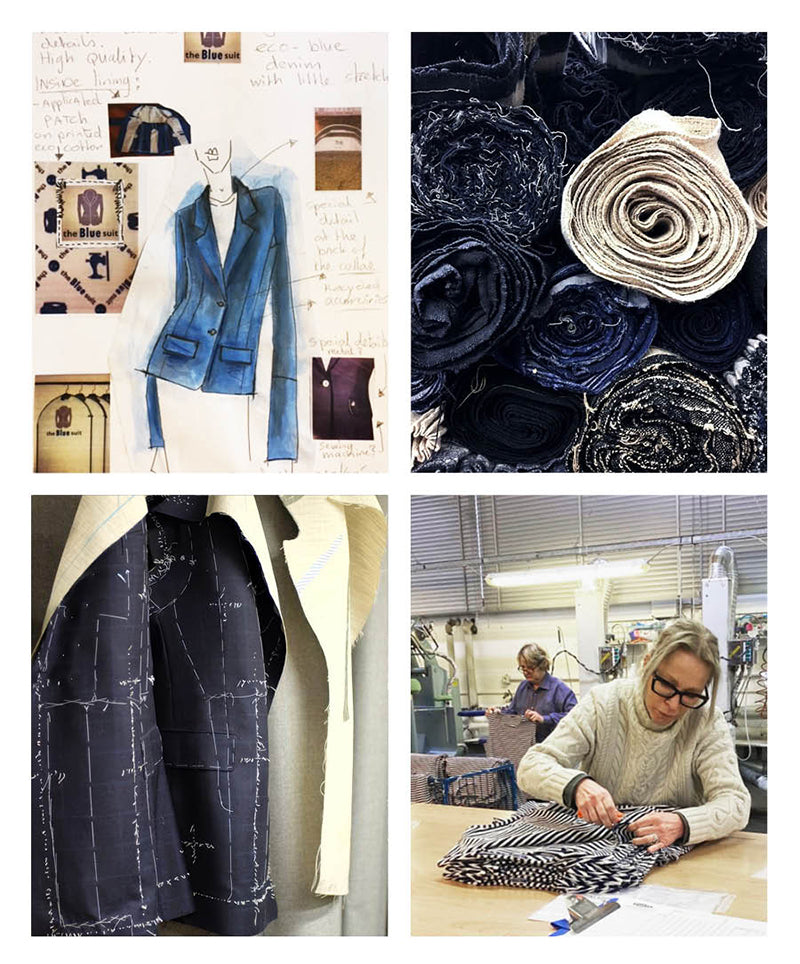
For more than twenty years I made collections across the Middle and Far East, and I saw how most garments are really made: with toxic dyes and finishes that pollute the water, the soil and the places where people work. In Italy I had learned a cleaner and more honest way to produce clothing. So I decided to stop compromising, and to prove every step I took.
GOTS and OEKO-TEX form the industry's baseline: they confirm that a fibre is organic and that a material is free of harmful substances. I went further, to Cradle to Cradle. That standard measures five categories at once, the health of the materials, their safe return to use, air and climate, water and soil, and the fairness of the work, and every one of them has to be met.
The hardest part was persuading each supplier to open its full recipe to the auditor, replacing whatever could not pass, right down to the oil in the sewing machines, and documenting all of it. That work, and knowing exactly who to call, is how the supply chain was built.
Yvonne Vermeulen, founder
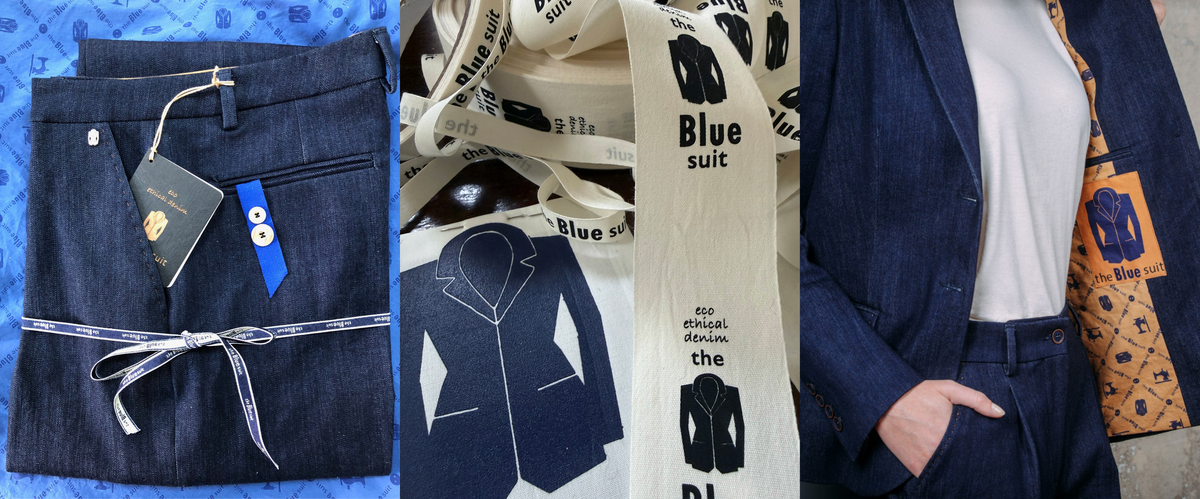

Two pairs of hands
Most clothing is made on an assembly line, where each worker repeats one task. In the atelier we work with in Northern Italy, a patternmaker draws the pattern, cuts the cloth and carries out the final check, and one dressmaker builds the whole garment, from the first seam to the last button. The fairness of that work is one of the five categories the audit scores.
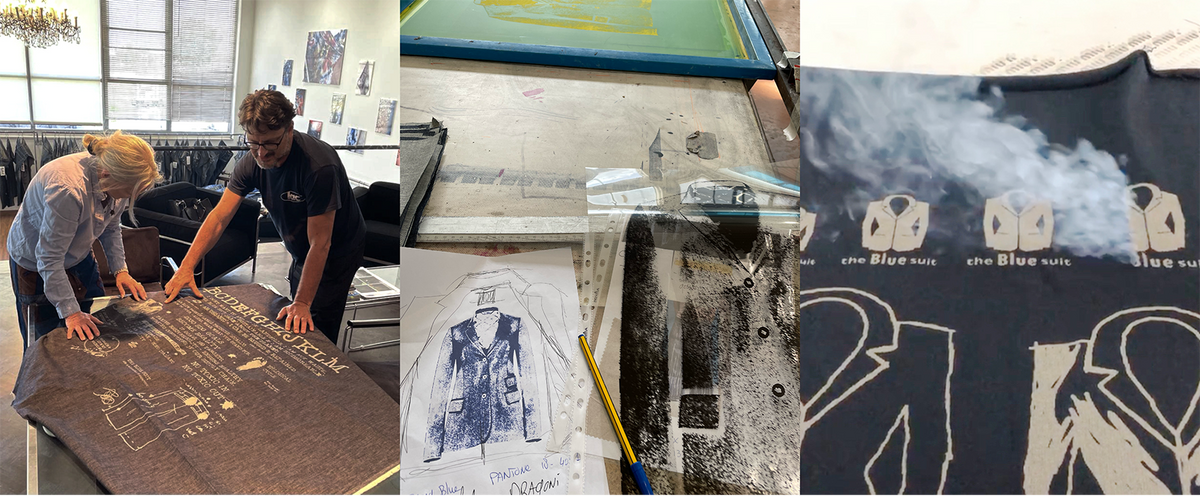
The finishing is where the difference shows. Prints are drawn with a laser that burns the colour out with light. The pleats of the SMITH and JONES blouses are folded and stitched by hand, with no heat or chemical fixation. The wash uses E-Flow, air and a mist of tiny bubbles instead of a drum of water: one glass per pair of jeans where a conventional wash uses around sixty litres, and no soap or chemicals. Every piece then dries in the open air, which saves energy, spares the cloth and means less ironing.
Every input known, assessed, documented and independently audited, then audited again.
The supply chain step by step
Material entry
Every fabric and component enters with GOTS or OEKO-TEX STANDARD 100 as its baseline.
Chemical disclosure
Each supplier opens its full formulation to the Cradle to Cradle assessor, and anything that cannot pass is replaced. A material whose maker cannot disclose its process, like our seaweed knit, stays at GOTS level.
Fabric
Organic cotton denim, woven in Northern Italy with no chemical finish. Black and ecru denim at Cradle to Cradle Gold; the blue denim collection carries GOTS.
Colour and print
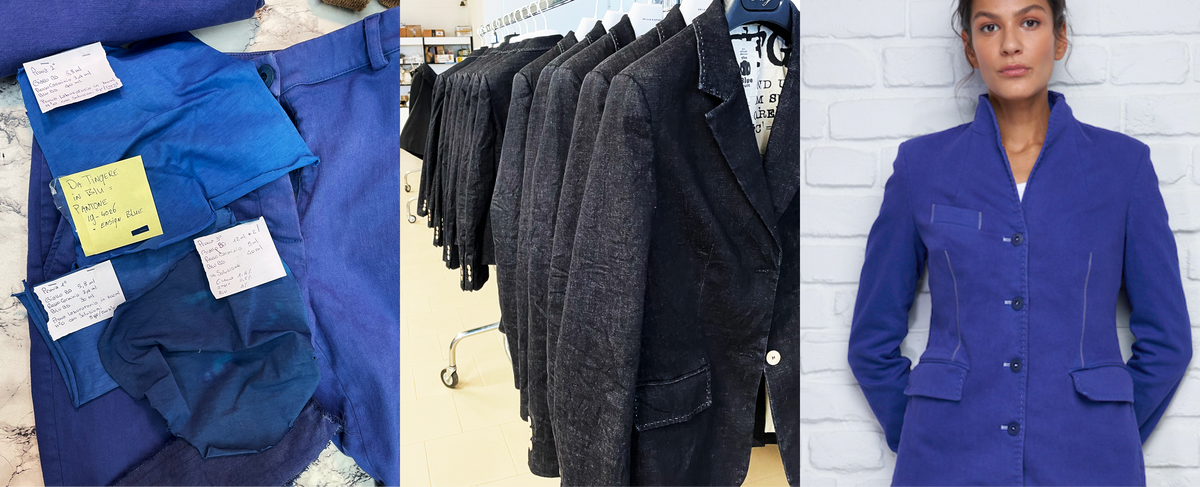
Toxic-free dyes, developed and tested within the chain. Hand silk-screen printing on flat panels, free of microplastics, with Cradle to Cradle Gold ink. Laser printing in place of bleach, audited.
Components
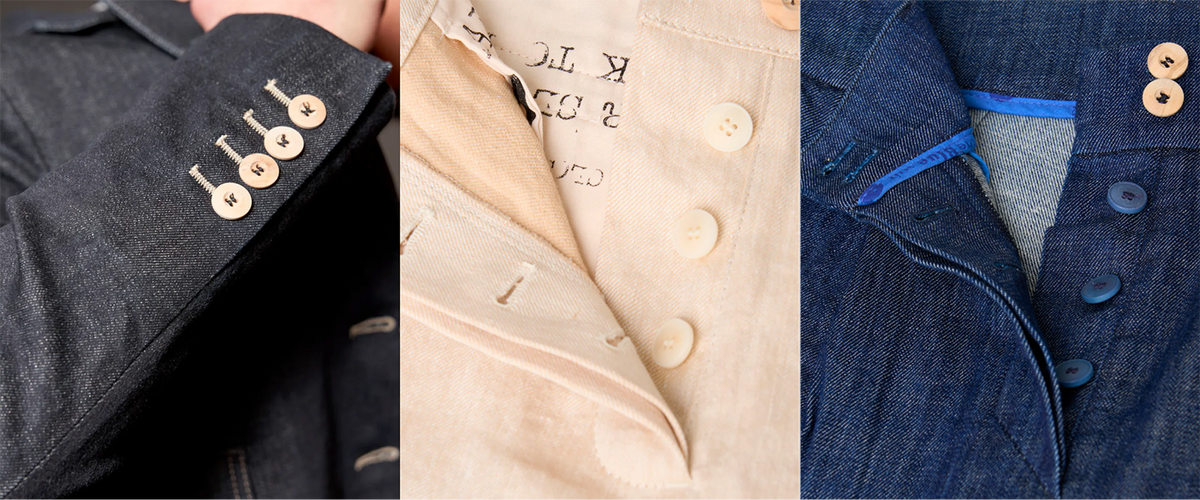
Buttons in untreated olive wood, Corozo or mother of pearl. Organic cotton linings at Cradle to Cradle Gold. Shoulder pads in organic cotton (GOTS). Organic cotton labels, hang tags of cellulose and C2C paper, plastic-free packaging. Zips are avoided, with one exception: the back of the KONO overall, nickel-free on an organic cotton band. Elastic of organic cotton and natural rubber (GOTS) is used only in the KONO overall and GILL trousers. Sewing thread is organic cotton; on the highest-stress seams a recycled fibre blend, at most 1% of the garment's weight, holds the seam. That thread is why the finished garments hold Bronze while the materials hold Gold.
Cutting and sewing
Individual production system: one patternmaker cuts and controls, one dressmaker builds the whole garment. No harmful chemicals or oils on the cutting tables or in the sewing machines.
Pleating
Pleats measured, folded and stitched by hand in organic cotton, with no heat or chemical fixation.
Washing
E-Flow technology with air and nano-bubbles: one glass of water per pair of jeans, no soap or chemicals. Blue Suit garments are washed separately, never mixed with non-audited garments, to keep out microplastics. The water is filtered and reused.
Drying
Air-dried on hangers. No tumble dryer: less energy, less wear on the cloth, less ironing.
Certification and traceability
Cradle to Cradle Certified® version 4.0, with materials at Gold and finished garments at Bronze, confirmed through regular, documented audits that reach the washing, the laser work and the atelier itself. Certifying a single jacket takes 26 documented steps. The complete chain is recorded on Retraced, from raw fibre to finished garment.
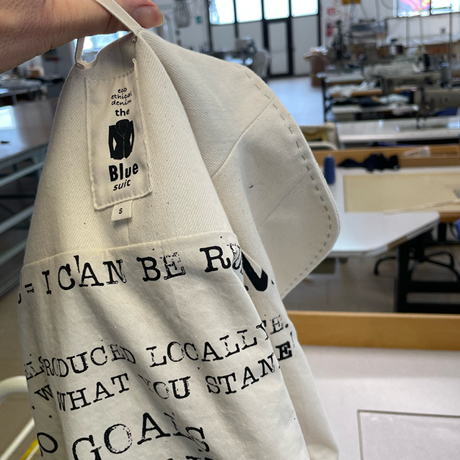
Why this matters now
European law is making this kind of chain the standard. From 27 September 2026, green claims in EU consumer marketing need certified proof. Large companies may no longer destroy unsold clothing. From 2028 at the earliest, the Digital Product Passport will ask every garment for data on its materials, chemistry and origin. This chain already holds that data at product level.

Built in Italy, ready for the world
The chain was developed in Northern Italy, and its value lies in the method. Cradle to Cradle asks the same of every country, and the sequence that meets it travels: disclose, assess, replace, document, audit, repeat. Every supplier requirement and every audit point is written down, so the method can be applied in production regions, from Turkey to China, with each new facility assessed against the same standard.